Few safari moments match the quiet thrill of spotting an animal before anyone else in the vehicle has seen it. A flick of an ear in the grass. Fresh tracks crossing a dusty road. A sudden burst of alarm calls from impala near a riverbank. In Kruger National Park, wildlife watching is rarely about luck alone. It is much more often about patience, timing, and reading what the bush is telling you.
That is good news for first-time visitors and seasoned travellers alike. You do not need expert-level field skills to improve your sightings. You just need to slow down, watch the habitat, listen carefully, and spend more time in the right places. For many guests staying at a Hazyview guest house, a hazyview hotel, or at Tembo Guest Lodge in Hazyview, entering the southern parts of Kruger National Park with this approach can turn an ordinary drive into a rich, memorable safari.
Slow game viewing in Kruger gives you better odds
Kruger is huge, varied, wonderfully alive, and perfect for tracking wildlife like the black rhino and the spotted hyena. SANParks lists about 148 mammal species in the park, along with more than 500 bird species, making it a paradise for birdlife enthusiasts. That range means one simple thing: there is always something to see, even when the Big Five are not on cue.
It also means rushing from one tar road to the next can work against you. Fast driving narrows your field of view. You miss small clues. You pass over water-rich spots too quickly. You arrive at sightings after the best part is over.
A slower pace gives the bush time to open up, making an ideal opportunity for those enjoying a Hazyview self-catering experience to relax and immerse themselves in nature.
When people talk about “good game viewing”, they often mean lions, leopards, elephants, giraffes, white rhinos, black rhinos, and buffalo. Those are special sightings, of course, but SANParks also reminds visitors not to treat the Big Five as the only safari measure that counts. Kruger rewards people who notice the full cast of animals, birds, reptiles, tracks, and behaviour around them.
After a quiet stretch of road, these habits usually help:
- Drive slowly
- Stop at safe pull-offs
- Scan from near to far
- Look into shade as well as open ground
- Keep the windows down when possible
- Return to promising spots later in the drive
Kruger habitats and animal spotting patterns
One of the best ways to learn how to spot animals in Kruger National Park is to read the habitat first, perhaps by staying in picturesque hazyview self-catering accommodations nearby. SANParks divides the park into 16 macro ecozones, though for many travellers a broad north-south picture is already very useful. North of the Olifants River, Kruger is predominantly mopane veld. South of the Olifants, thornveld becomes more common.
That difference shapes sightings. Mopane veld can feel more uniform at first glance, with broad stands of mopane and longer views in some areas. Thornveld in the south often offers richer grazing, denser cover, and busy mixed-species areas where antelope, zebra, wildebeest, elephants, and predators may all be part of the same scene.
If you know what the vegetation is likely to support, your scanning becomes more focused.
| Kruger habitat area | What it often looks like | Wildlife spotting pattern | Best way to watch |
|---|---|---|---|
| Southern thornveld | Denser shrub, sweet grazing, mixed woodland and open patches | Good numbers of grazers, regular predator activity, busy waterholes | Stop often, check edges of thickets, scan open grass for movement |
| Northern mopane veld | Mopane-dominant woodland, broad stretches of similar vegetation | Elephant, browsers, general game, excellent birding in selected areas | Look carefully at shade lines, browse height, and roads near water |
| Rivers and drainage lines | Thick riverine vegetation, reeds, sandbanks, large trees | Hippo, crocodile, birds, elephant, leopard, drinking game | Pause at bridges, causeways, and viewpoints |
| Far north around Pafuri and Punda Maria | River systems, woodland, varied bird habitat | One of South Africa’s standout birding regions | Spend longer at water and in mature trees, where a giraffe might be spotted browsing high branches. |
For visitors based near Hazyview, the southern section is often a brilliant place to practise these skills, where you may even spot a cheetah, and there are many Hazyview self-catering accommodations available to make your stay convenient, offering excellent options for accommodation in Hazyview. The habitat changes quickly, and animal density can make patterns easier to notice, especially with the diverse birdlife in the area.
Waterholes, rivers and hides in Kruger are high-yield places
If there is one easy upgrade for almost any safari day, it is this: spend more time near water. In Kruger, waterholes, rivers, dams, causeways, and hides repeatedly produce strong sightings because animals need them, birds are drawn to them, and predators know this too.
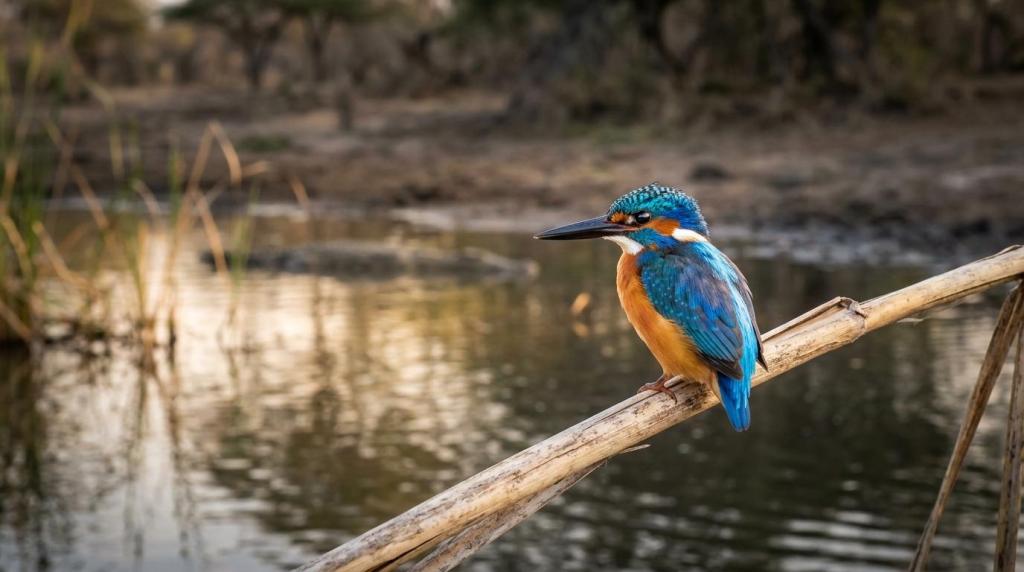
SANParks notes that Kruger has 11 bird and game-viewing hides, and all of them are placed at waterholes or on rivers. That is no accident. A hide gives you a quiet, fixed position where the natural rhythm of the area can carry on around you. The longer you sit, the more layers appear. Waders move into the shallows. Buffalo approach in dusty files. Crocodiles stay half-hidden at the edge. A kingfisher flashes past. Then, much later, a shy antelope may step in once the busier animals have drifted off.
SANParks also points out that people who sit patiently at a hide often see more than people who spend the whole day driving around looking for game. That idea can feel surprising at first, but it makes perfect sense once you try it.
When you stop at a water-rich area, keep these focal points in mind:
- Waterholes: watch the approach routes, not only the water itself
- Rivers and causeways: scan sandbanks, reed margins, low branches, and shady pools
- Hides: stay quiet, settle in, and give the area time to reset after people arrive
- Rest-camp edges: check nearby trees, open verges, and fence lines at first and last light
Dry-season water sources can be especially rewarding. As surface water becomes less widespread, animals concentrate around reliable drinking spots. Gomondwane waterhole, noted by SANParks, becomes popular in the dry season for impala, zebra, wildebeest, and other wildlife, including the elusive white rhino and the elusive spotted hyena, making it an ideal spot for those seeking hazyview self-catering options nearby. Where herbivores gather, predators are never far from the story.
Tracks, dung and movement signs on Kruger roads
Fresh spoor can tell you more than a quick glance into the bush, especially when exploring a hazyview self-catering area. Soft sand on a road, a dusty pull-off near a waterhole, or the edge of a causeway can all hold clues about what has passed recently.
Large round tracks with a soft, padded shape may point to big cats. Hoofprints clustered in many directions often mean a herd has been feeding or moving through. Elephant tracks are hard to miss, and broken branches at browsing height can confirm that a group has not gone far. Dung, flattened grass, scrape marks, and muddy impressions near water all add to the picture.
You do not need to identify every sign perfectly. The real value is in asking a few simple questions. How fresh is it? Is it crossing the road or travelling along it? Are there many animals or just one? Does the surrounding bush offer cover, shade, or water nearby?
Sometimes the road tells you where to wait rather than where to chase. If a leopard track enters a dense drainage line at sunrise, racing ahead may not help. Sitting quietly at the nearest open view over that drainage may.
Animal calls and alarm calls that help you spot predators
Often, the first sighting is heard, not seen.
Kruger’s soundtrack is full of useful clues. Impala give sharp snorts when unsettled. Vervet monkeys can become noisy and agitated when a predator is nearby. Baboons barking from rocky ground may signal movement below them. Birds, too, can draw attention to a snake, owl, or hunting cat by mobbing and calling persistently.
The trick is not to treat every sound as drama. Bush life is noisy. Rather, listen for change. A calm scene has a certain rhythm. When that rhythm tightens, stops, or bursts into alarm, it is worth pausing.
A few sounds are especially helpful when paired with habitat and tracks:
- Impala alarm snorts: often worth scanning the nearest thicket or drainage line
- Baboons barking from height: good reason to check open slopes and river fringes
- Agitated vervet monkeys: may point to a leopard, snake, or eagle
- Sudden bird commotion: look for movement in low branches, reedbeds, or road-edge scrub
This is one reason early mornings feel so alive on safari. The air is cooler, the bush is quieter, and each call seems to carry more clearly across the veld.
Best times and seasonal patterns for wildlife spotting in Kruger
Early morning and late afternoon remain the classic game-viewing windows for good reason. Many animals move more freely in cooler temperatures, and the soft light makes shape, colour, and motion easier to pick up. Midday can still be productive, though the strategy changes. Rather than driving endlessly, it often pays to check shaded river sections, waterholes, hides, and camp surrounds.
The dry season is widely linked with easier sightings because vegetation is thinner and animals rely more heavily on dependable water points. Concentrated activity around rivers and waterholes can make patterns easier to read. You may see more from one patient stop than from several long loops around the road network.
Green season drives have their own charm. The park looks lush, migratory and summer birding can be excellent, and many animals have young. Yet taller grass and thicker foliage mean you need sharper scanning and a little more patience.
For birders, the far north deserves special attention. SANParks regards Pafuri and Punda Maria as one of South Africa’s birding meccas. If birdlife is high on your list, those areas are worth extra time, especially around water and mature riverine trees.
Quiet observation points in Kruger often beat constant movement
There is a natural urge on safari to keep going. Another car has stopped ahead. A rumour of lions has come over the radio. A crossing point looks busy. Yet some of Kruger’s richest moments happen when you resist the urge to rush.
A quiet bridge over a river. A hide at a waterhole. A viewpoint above a causeway. The shady edge of a rest camp just after sunrise. These are the places where behaviour unfolds, and behaviour is often what leads you to the next sighting.
You start noticing who is relaxed and who is tense. Which birds keep returning to a pool. Where zebra prefer to stand. Which patch of shade remains oddly empty because something unseen is already there.
That is when Kruger stops feeling random and starts feeling readable.
For travellers who want a more relaxed, more rewarding safari day, perhaps complemented by accommodation in Hazyview, this simple shift helps most: let the bush come to you. Stay still a little longer. Listen before moving off. Watch the water. Read the habitat. The animals are there, often much closer than they first appear.