A self-drive through Kruger is one of those rare travel experiences where slowing down usually gives you more, not less. More wildlife movement, more quiet moments, and more time to notice what is happening around you. The park’s driving rules are built around that idea.
For many visitors, especially those heading out early from their Hazyview accommodation, the best sightings come when they stop treating the road like a route from one point to another and start seeing it as part of the safari itself. In Kruger, responsible driving is not only about avoiding fines or following signs. It is about protecting wildlife, respecting other visitors, and keeping everyone safe.
Kruger speed limits on tar roads and gravel roads
Kruger National Park has clear self-drive speed limits. According to SANParks, the limit is 50 km/h on tar roads and 40 km/h on gravel roads. Those limits can feel slower than everyday driving, but they suit the setting. Animals can move onto the road with very little warning, and a few extra seconds of reaction time matter far more in a national park than on an ordinary road.
Slow driving also improves the safari itself. You are more likely to spot a leopard in the shade, a herd of elephant just beyond the verge, or a bird of prey on a branch if you are not rushing. Many experienced Kruger visitors know this well: the slower pace is part of the reward.
| Road type in Kruger | Official speed limit | Why it matters |
|---|---|---|
| Tar roads | 50 km/h | Gives drivers more time to react to animals and other vehicles |
| Gravel roads | 40 km/h | Reduces dust, improves control, and suits roads with less grip |
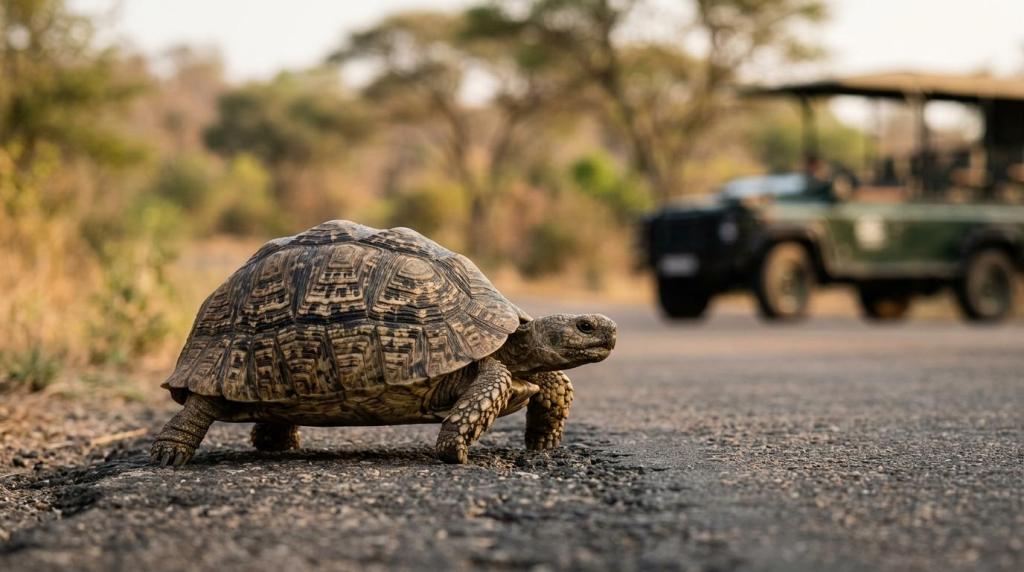
There is also a practical side to these limits. Gravel roads can be uneven, loose, or narrow in places. Tar roads may seem easier, yet wildlife often crosses them without warning. A buffalo, warthog, impala, or even a small tortoise can appear in front of your vehicle very quickly.
Driving below the limit is often the better choice when visibility is poor, when animals are nearby, or when there are several cars at a sighting. The posted maximum is not a target. It is simply the upper limit under suitable conditions.
Kruger vehicle rules and staying on designated roads
Kruger’s road rules are closely linked to visitor safety. SANParks states that visitors must remain in their vehicles unless they are in a designated area. It also says that no part of the body may protrude from a window, sunroof, or any other part of the vehicle. That means no leaning out for photos and no children standing up through an opening.
These rules can feel strict until you remember where you are. Kruger is not a drive-through zoo. Wild animals do not behave on cue, and even calm-looking animals can react very fast. Keeping everyone inside the vehicle reduces risk and also keeps animal behaviour more natural.
The same applies to the roads themselves. Off-road driving is prohibited, and so is driving on closed or no-entry roads. These restrictions protect habitats, limit disturbance, and help park management keep routes safe and manageable.
A few of the most important rules are easy to keep in mind:
- Stay inside your vehicle: Unless you are in a designated area
- Keep body parts inside: Windows and sunroofs are not viewing platforms
- Use only open roads: Closed and no-entry roads are off limits
- Short stops only where safe
- No off-road driving
- No feeding wildlife
SANParks also treats feeding or disturbing animals as a serious offence. Feeding may look harmless in the moment, yet it can change animal behaviour, make animals associate vehicles with food, and create danger for both people and wildlife.
Safe wildlife sightings in Kruger National Park
Seeing animals from your own car is a big part of Kruger’s appeal, but sightings are where poor driving choices often show up. Excitement can lead to sudden braking, stopping in awkward places, or edging too close to an animal. A calmer approach is better for everyone.
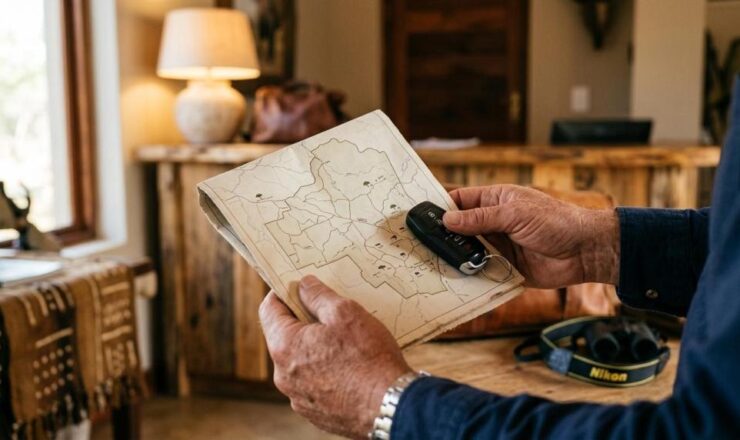
One helpful tool is the sightings map at reception. SANParks says it is updated daily, and it can help visitors plan their route with more purpose. Rather than racing around the park hoping to get lucky, you can use recent sighting information to choose a sensible direction and then drive patiently.
When you do come across wildlife, simple habits make a difference:
- Approach slowly: Let the sighting unfold without rushing into it
- Leave space: Animals should have room to move away from the road if they want to
- Be patient: A quiet wait often leads to better behaviour and better photos
- Think about other cars: Stop in a way that does not create a dangerous blockage
- Keep the mood calm: Sudden noise and movement can spoil the moment quickly
It also helps to remember that not every sighting will be dramatic. Sometimes “responsible” means accepting a partial view, waiting your turn, or moving on if the road position is unsafe. Kruger rewards patience more often than urgency.
Kruger gate times, day visits and route planning
A good safari day starts before the engine does. Kruger works on gate schedules, and visitors need to plan around gate opening times and closing times. If you are doing a self-drive, this affects your route, your rest stops, and how long you can spend at sightings without rushing later in the day.
SANParks allows advance reservations for day visits, and there is a maximum daily visitor threshold. That matters during busier periods, especially school holidays, long weekends, and popular travel months. Booking ahead can make the day smoother and reduce the stress of trying to sort out access at the last minute.
Route planning should be realistic. Kruger is large, and distances inside the park often take longer than people expect. A short section on the map can turn into a slow, rewarding hour when you include sightings, photo stops, and careful driving. Trying to squeeze too much into one day is one of the easiest ways to end up speeding, feeling flustered, or arriving late at the gate.
A simple planning routine helps:
- Check gate times before the day starts.
- Choose one area rather than trying to cover too much ground.
- Allow extra time for wildlife sightings and slow traffic.
- Keep enough buffer to return comfortably before closing.
That slower plan often leads to a better safari anyway. You notice more, you drive more safely, and the whole day feels less pressured.
Early morning game drives and quieter Kruger roads
There is a good reason many visitors love early game drives. SANParks notes that morning game drives leave half an hour before official gate opening times, and these drives usually last about 3 to 3.5 hours. That earlier access can mean quieter roads and a different feel in the bush.
The park often feels especially peaceful at that time of day. Light is softer, temperatures are cooler, and animals may still be active from the night. For first-time visitors, that can make the experience feel calmer and easier to follow, especially when a trained guide handles the driving and spotting.
For travelers looking at Accommodation in Hazyview, an organized morning drive can also remove some of the pressure around gate times, route choices, and park etiquette. It suits guests who want the thrill of Kruger without the responsibility of doing every part themselves.
Common mistakes that make Kruger driving less responsible
Most problems in Kruger do not start with bad intentions. They start with hurry, excitement, or simple lack of preparation. A visitor sees a queue of cars and speeds up. Someone spots lions and stops badly. A family tries to fit too much into one day and then spends the afternoon watching the clock.
Those small choices can change the feel of the park very quickly. They also affect other people’s experience. Responsible driving is partly about your own safety, but it is also about sharing the space well.
Some common mistakes are easy to avoid once you know what to look out for:
- Rushing from sighting to sighting
- Treating the speed limit as a suggestion
- Stopping where the road is too narrow
- Leaning out for photos
- Ignoring closed-road signs
- Letting children move around the vehicle
- Trying to “chase” a reported sighting
There is also a gentler mindset that helps. Instead of asking, “How much can we cover today?” it often works better to ask, “How can we make this drive calm, safe, and enjoyable?” That change in attitude usually leads to better wildlife viewing as well.
Responsible driving habits that improve the whole safari
Kruger’s rules are practical, but they also shape the tone of a visit. Slower speeds, staying on marked roads, respecting gate times, and using the sightings map all work together. The result is a park where wildlife can move more naturally and visitors can enjoy a safer, more relaxed experience.
That is why many regular visitors return to the same simple habits again and again: start early, plan a modest route, keep to the official limits, and let the sightings come to you. In a place like Kruger, calm driving is not a compromise. It is often the very thing that makes the day memorable.