
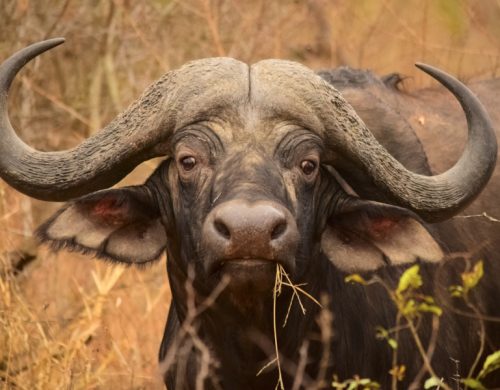
Kruger Safaris from Tembo Guest Lodge, Hazyview
Tembo Guest Lodge sits in Hazyview, 10 to 15 minutes by road from the Phabeni Gate of Kruger National Park. Every guided safari is operated by Africa Moja Tours and Safaris, with pickups from the lodge. If you already know which drive you want, head to our Kruger Park Packages page for multi-day bundles or Kruger Safaris for individual tour detail. If you’re still deciding, keep reading.
What You Will See on a Kruger Safari
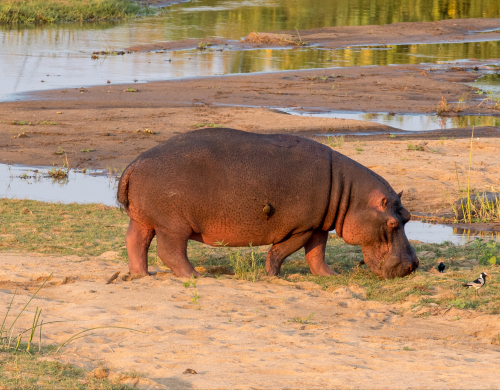
Kruger is one of Africa’s most productive wildlife parks. The headline act is the Big Five: lion, leopard, elephant, buffalo, and rhino. Around them you’ll meet a wider cast including giraffe, zebra, hippo, kudu, warthog, impala, and more than 500 bird species.
No responsible guide will promise you a Big Five sweep on a single drive. Kruger is wild, not staged, which is exactly what makes sightings feel special. What a good guide can do is give you a strong chance at the common species on every outing, and patiently work the tracks and radio network for the rarer ones.
Rough Likelihood on a First Drive from the Southern Gates
| Animal | Likelihood on a First Drive | Where You May See It |
|---|---|---|
| Elephant | Very likely | Near water, woodland, roadside thickets |
| Giraffe | Very likely | Open savanna, woodland edges |
| Zebra | Very likely | Grassland and open roadsides |
| Impala | Almost certain | Throughout many areas |
| Buffalo | Likely | Open grassland, muddy areas, near water |
| Warthog | Likely | Road edges, open ground |
| Kudu | Likely | Thicker bush and woodland |
| Lion | Possible | Open plains, near shade, roadside verges |
| Hippo | Possible | Rivers and dams |
| Leopard | Less common | Dense bush, riverine areas, in trees |
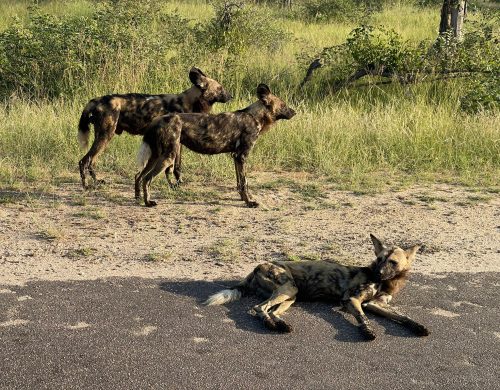
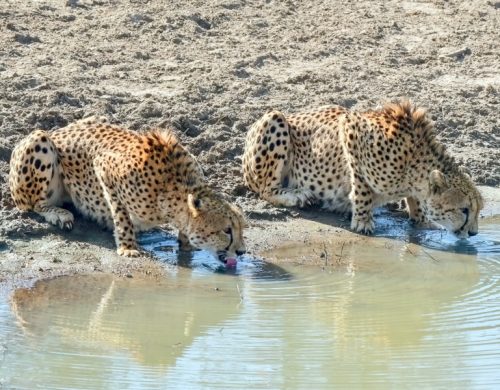
Rhino, cheetah, and wild dog are much more a matter of luck, timing, and location. Multi-day packages improve your odds because you are in the park for more drives across different times of day.
When to Go: Seasons and Months
Kruger splits cleanly into two seasons, and they deliver different safaris.
Dry winter (May to September) is the classic wildlife window. Grasses shorten, bush thins, and water sources shrink, so animals concentrate around rivers and waterholes. Mornings are cold — often single digits before sunrise — but the sightings are reliable. June to September is widely regarded as the best stretch for big-game visibility.
Green summer (October to April) is the scenic counterpart. The park turns lush, migrant birds arrive, antelope calves appear, and afternoon thunderstorms bring drama. Trade-off: thicker vegetation makes the Big Five harder to find consistently, and the malaria risk is higher in the warmer, wetter months.
| Priority | Best Months |
|---|---|
| Best for big-game visibility | June to September |
| Best for comfortable, quieter travel | April, May, early June |
| Best for birds, wildflowers, and a green park | November to March |
| Best for warm days without full summer density | September and October |
Which Gate Should You Use?
Kruger has several gates within reach of Hazyview. The three that matter for most Tembo guests are Phabeni, Numbi, and Paul Kruger.
| Gate | Drive from Hazyview | Best Access To | Landscape Just Inside |
|---|---|---|---|
| Phabeni | ±10 to 15 min | Pretoriuskop region, routes toward Skukuza | Mixed savanna and riverine near Phabeni stream |
| Numbi | ±18 min | Pretoriuskop (very close), scenic south-western area | Sourveld woodland with granite hills and big views |
| Paul Kruger | ±40 min | Skukuza (quickest), good link toward Lower Sabie | Farm belt outside, then classic southern Kruger road network |
All three gates open around 05:30 in summer and 06:00 in winter, close near sunset, accept card payment only, and have no fuel on site — fill up in Hazyview before you leave. For most guests staying at Tembo, Phabeni is the default choice: the shortest transfer and a welcoming mix of open and riverine bush inside.
How Long Should Your Safari Be?
| Format | Duration | Best For |
|---|---|---|
| Half-day drive | ~4 hours | Add-on to another activity; arrival or departure days; morning drives catch predators still active; afternoon drives end in golden light |
| Full-day drive | ~10 to 11 hours in the park | Strongest single-day option. Cover more ground, reach Skukuza or Lower Sabie. Best odds on the wider Big Five cast. |
| Multi-day package (2, 3, or 4 days) | 2 to 4 days | Real immersion. Multiple drives across different times of day. The 3-day package is the most popular balance of depth and budget. |
What to Expect on Your First Game Drive
The vehicle. An open 4×4 with raised bench seating, usually with a roof canopy for shade or weather. You feel part of the landscape rather than separated from it.
The timing. A standard guided drive runs about 3 to 3.5 hours, though full-day tours extend that significantly. Morning drives depart before or around gate opening, when predators may still be moving and elephants head to water before the heat builds. Afternoon drives end in softer light as nocturnal animals begin to stir.
The guide’s job. A good guide does far more than drive. They read tracks, watch bird behaviour, listen for alarm calls, and coordinate with other vehicles over a radio network. They’ll also explain what you’re seeing: why elephants bunch at water, why impala freeze in alarm, what the drying river lines tell you about recent rain.
What to Pack
- Warm layer for early mornings, especially May to August
- Hat, sunglasses, sunscreen, lip balm
- Binoculars if you have them
- Camera with a spare battery
- At least one bottle of water per person
- Closed shoes
- Insect repellent
- A small personal bag for the vehicle
Etiquette That Keeps Drives Safe and Enjoyable
- Stay seated unless the guide instructs otherwise
- Keep arms and cameras inside the vehicle near animals
- Speak softly; phones on silent
- No feeding animals, ever
- Follow the guide’s instructions without debate near wildlife
The Drives and Tours Available from Tembo
| Drive | Departs | Duration | Gate | What It Targets |
|---|---|---|---|---|
| Full-Day Kruger Safari | 05:00 to 05:30 | ~10 to 11 hours in park | Phabeni | Best single-day option. Breakfast stop at Skukuza or Lower Sabie. Broadest Big Five coverage. |
| Half-Day Morning Safari | 05:30 | ~4 hours | Phabeni | Predators still moving at dawn, elephants heading to water. Good for arrival days or short stays. |
| Half-Day Afternoon Safari | 13:00 | ~4 to 6 hours | Phabeni or Paul Kruger (conditions-based) | Animals stir as temperatures cool. Golden-hour light. Good for departure days. |
| Kruger Night Game Drive | Pickup 18:45; drive 20:00 to 22:00 | ~3.5 hours total | Paul Kruger Gate | Nocturnal targets: spotted hyena, civets, genets, bush babies, occasional leopard. SANParks spotlight vehicles. |
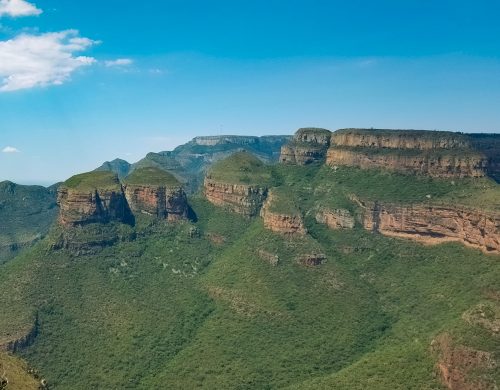
| Full-Day Panorama Route Tour | 08:00 | ~9 hours | N/A (scenic road trip) | Blyde River Canyon, Three Rondavels, God’s Window, waterfalls. Air-conditioned vehicle, max 7 guests. |
All drives include pickup and drop-off at Tembo Guest Lodge, bottled water, and the relevant Kruger entrance and conservation fees.
Health, Safety, and Practical Notes
| Topic | Detail |
|---|---|
| Malaria | Kruger carries a malaria risk, with the higher-exposure window during warmer, wetter months (October to March). Talk to a medical professional before you travel, cover up at dusk and dawn, and use repellent. |
| Gates: payment | All Kruger gates accept card payment only for conservation fees. No cash. |
| Fuel | No fuel at any gate. Fill up in Hazyview or White River before entering the park. |
| Conservation fees | SANParks charges a daily conservation fee per visitor. All guided tours from Tembo include this in the price. |
Frequently Asked Questions
How far is Tembo Guest Lodge from Kruger National Park? Tembo is in Hazyview, 10 to 15 minutes by road from the Phabeni Gate of Kruger National Park. Paul Kruger Gate is about 40 minutes, and Numbi Gate is about 18 minutes.
What is the best time of year for a Kruger safari? For reliable big-game viewing, the dry winter months from June to September are the strongest window. Grasses are short, bush is thinner, and animals concentrate around rivers and waterholes. If you prefer a greener park, migrant birds, and newborn antelope, summer (November to March) is beautiful, though vegetation is thicker.
Will I see the Big Five? Elephant, buffalo, lion, and rhino are all realistic on a well-run drive, particularly in the dry season. Leopard is the most elusive and is never guaranteed on a single outing. Multi-day packages improve your odds significantly.
How long is a typical game drive? A standard guided drive runs about 3 to 3.5 hours. Full-day Kruger safaris from Tembo extend that to roughly 10 to 11 hours in the park, with a comfort and breakfast stop at Skukuza or Lower Sabie.
What should I wear and bring? Warm layers for early mornings (especially May to August), a hat, sunglasses, sunscreen, closed shoes, insect repellent, binoculars, a camera with a spare battery, and at least one bottle of water per person.
Do I need to pay Kruger conservation fees separately? No. All guided safaris from Tembo include the SANParks conservation and entry fees in the tour price.
Are the gates cashless? Yes. All Kruger gates accept card payment only, and there is no fuel at any gate. Fill up in Hazyview or White River before you leave.
Which gate does my safari use? Full-day and morning half-day safaris enter via Phabeni Gate. Afternoon half-day safaris enter via Phabeni or Paul Kruger Gate depending on wildlife activity. The Night Game Drive enters via Paul Kruger Gate, meaning a longer transfer from Tembo (approximately 40 minutes each way).
Is there a malaria risk? Kruger carries a malaria risk, with the higher-exposure window in the warmer, wetter months from October to March. Speak to a medical professional before you travel.
Can you pick me up from the lodge? Yes. All guided safaris include pickup and drop-off at Tembo Guest Lodge. You do not need to arrange your own transport.
Are safaris suitable for children? Most drives welcome families. The Night Game Drive requires a minimum of two paying guests and is less suitable for very young children given the late timing. Full-day and multi-day packages offer the most flexibility for families.
How far in advance should I book? The quieter months of April, May, and early June are easier to secure close to your travel date. During South African school holidays in June to August and December, book accommodation and drives well in advance — both the park and Hazyview fill up quickly.