The southern gates of Kruger National Park have a way of turning an ordinary game drive into a proper birding morning. One minute you are watching impala in the soft light, and the next a lilac-breasted roller flashes electric blue across the road, a fish eagle calls from the river, and a hornbill hops through the branches overhead.
For many visitors, the south is the easiest place to begin birding in Kruger. The habitats are varied, the roads are well known, and the mix of river, woodland and open grassland means there is always something to scan for. Whether you are a keen lister with binoculars at the ready or simply someone who enjoys colour, birdsong and the rhythm of the bush, this part of the park is wonderfully rewarding.
Why the southern gates are so good for birding
The stretch around Malelane, Crocodile Bridge, Lower Sabie, Skukuza and Pretoriuskop offers excellent variety within relatively short driving distances. River systems attract kingfishers, lapwings, herons and fish eagles, while the surrounding savanna brings rollers, shrikes, starlings, hornbills and raptors into view. Many visitors book Hazyview accommodation to take advantage of this diversity, making planning an early start through Phabeni or Paul Kruger Gate much simpler.
Season matters too. Summer, usually from October to March, brings a lively burst of migrant species and a rich dawn chorus after the rains. Winter strips things back a little, yet that can make birding easier in its own way. Water sources become more important, vegetation is thinner, and resident birds are often easier to pick out.
Top species to keep on your list
Near the southern gates, some birds are regular favourites and others feel like a real prize when they appear. A good day may give you both.
| Species | Why birders love it | Best places to look |
|---|---|---|
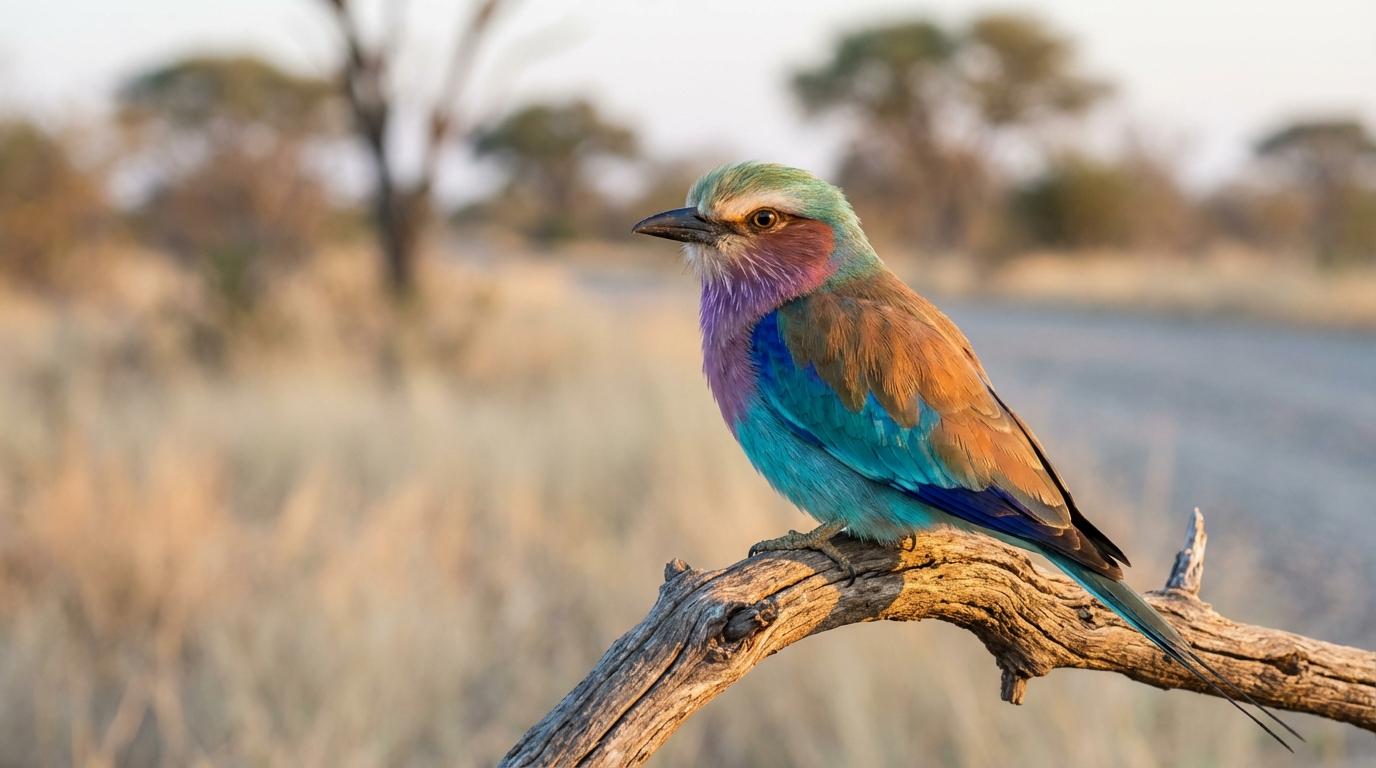
| Lilac-breasted Roller | Bright, unmistakable colours and very photogenic | Open roadside perches, savanna and woodland edges |
| Trumpeter Hornbill | Large, striking and often noisy in riverine trees | Sabie River areas, Skukuza, Lower Sabie |
| Southern Red-billed Hornbill | A classic Kruger bird, often seen close to roads | Woodland around camps and main drives |
| Martial Eagle | One of Africa’s most admired raptors | Tall trees, open areas, riverine woodland |
| African Fish Eagle | Iconic call and strong river presence | Sabie and Crocodile rivers, dams and weirs |
| Southern Carmine Bee-eater | Brilliant colour, especially good in summer | Sandy riverbanks, Biyamiti and Crocodile systems |
| Malachite Kingfisher | Small, vivid and often seen near still water | River edges, pools, reed-lined spots |
| Southern Ground-Hornbill | Unforgettable on foot in open veld, a major target bird | Open savanna and grassland patches |
| White-crowned Lapwing | Sought-after and localised near sandy riverbanks | Causeways and river edges near Lower Sabie |
| African Finfoot | Secretive and always exciting to find | Shaded, forested river margins along the Sabie |
That list only scratches the surface. You can also expect regular sightings of bee-eaters, barbets, sunbirds, weavers, shrikes, starlings and vultures, with cuckoos making summer drives especially lively.
Habitats and hotspots worth your time
If you want more birds, think in habitats rather than only gate names. Rivers are the obvious starting point. The Crocodile River road, especially the S25 section between Crocodile Bridge and Malelane, is excellent for water-associated birds, summer cuckoos and raptors. It is one of those drives where stopping often really pays off.
Lower Sabie and the Sabie River are favourites for good reason. There is always movement here: kingfishers at the water’s edge, herons in the shallows, hornbills in riverside trees, and fish eagles calling from prominent perches. The N’watimhiri causeway is also a strong area for scanning carefully for White-crowned Lapwing.
Skukuza adds another layer with its mature riverine trees and nearby birding spots like Lake Panic. Then there are the quieter roads and picnic areas. Biyamiti Weir can be very productive, while the Afsaal area is lovely for woodland birds including barbets, starlings and mousebirds. Open grassland sections closer to Renosterkoppies and similar areas can also be worth a slow look for bustards and larger ground birds.
Some of the most rewarding stops near the southern gates include:
- Crocodile River road near Crocodile Bridge
- Lower Sabie river viewpoints
- N’watimhiri causeway
- Skukuza and Lake Panic
- Biyamiti Weir
- Afsaal picnic site and surrounding woodland
- Open grassland patches near Renosterkoppies
Timing changes everything
A beautiful birding route can feel quiet if you hit it at the wrong time. In Kruger, bird activity follows the day closely, and small timing changes can make a big difference to what you see and hear.
The first light of day is usually the sweetest window. Calls carry clearly, birds move out to feed, and the soft light helps with both watching and photography. Mid-morning is often best for raptors once thermals build, while late afternoon brings another lift in activity as the heat drops.
A simple way to plan your day is this:
- October to March: Best for migrant cuckoos, bee-eaters, swallows and the busiest dawn chorus
- April to September: Best for concentrated activity around permanent water and easier visibility in thinner vegetation
- First light: Best for general bird movement, song and shy species before the roads get busy
- Mid-morning: Best for soaring eagles, vultures and other birds of prey
- Late afternoon: Best for another active feeding period before sunset
Start before sunrise
The first half-hour of light can outshine the next three.
If you can be ready early, do it. The southern Lowveld can become hot quite quickly, especially in summer, and birds often use the cooler hours well. Even from a camp, lodge garden or parking area, you may hear doves, barbets, hornbills and starlings long before the main drive begins.
The species that reward patience
Some southern Kruger birds are easy and cheerful companions throughout the day. Others ask for patience, quiet scanning and sometimes a little luck.
Southern Ground-Hornbill is one of the great birds to hope for. Seeing a group striding through open veld feels ancient and dramatic, and it is always memorable. Yellow-billed Oxpecker is another species worth watching for, often spotted on buffalo, rhino or other large mammals. In a park where mammals naturally draw attention first, these moments remind you how connected the whole scene really is.
Along more densely vegetated river margins, the mood changes. African Finfoot can be extremely elusive, slipping low along the water’s edge under overhanging branches. White-backed Night-Heron is another prized bird in thick riverine habitat, more often hoped for than easily found. Pel’s Fishing-Owl is even more elusive in the south and remains a true stroke of good fortune.
Summer also adds excitement through sound as much as sight. The southern river roads are famous for cuckoos during the wetter months. If you hear repeated calling from the riverside thickets, it is worth pulling over safely and waiting. Good birding in Kruger is often about staying still for a little longer than everyone else.
What to pack without overdoing it
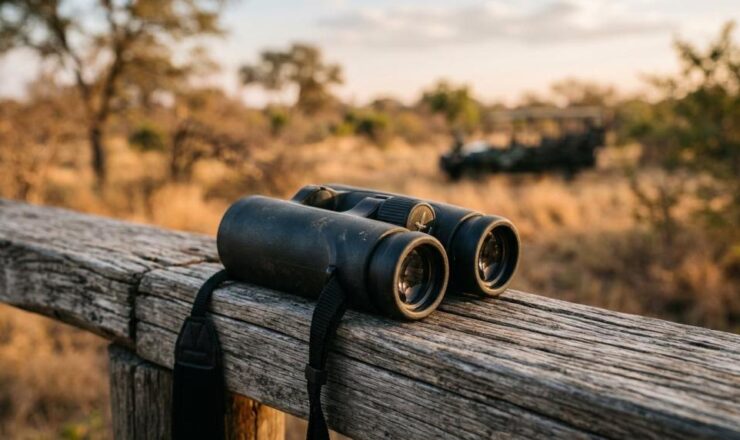
You do not need a vehicle full of equipment to enjoy birding here, though a few sensible items make the experience far better. A comfortable pair of binoculars is the one thing most people will use all day. Many birders are happy with 8×32 or 10×42. A field guide, printed or on your phone, helps when the day gives you a barbet, a warbler and a juvenile eagle in the same hour.
Clothing matters more than people sometimes expect. Neutral colours, a hat, sunscreen and plenty of water go a long way in southern Kruger. A light notebook or birding app is useful if you enjoy keeping lists, and a camera with a decent zoom is always welcome if photography is part of the plan.
A few essentials make the day easier:
- Binoculars: Your best companion for woodland edges, riverbanks and distant raptors
- Bird guide or app: Helpful for quick ID checks and call comparisons
- Water and sun protection: The heat builds fast, even on cooler mornings
- Power bank: Handy if you are using birding apps, maps and your camera phone
- Patience: Still one of the best tools you can carry
A gentle approach often brings the best sightings
Fast driving and constant movement can cost you birds. The south rewards a slower rhythm. Scan dead trees for raptors, look closely at flowering shrubs for sunbirds, and pay attention to gatherings of queleas, swallows or weavers because they can attract predators and other opportunists.
It also helps to use your ears. Kruger is full of birds that announce themselves before they show themselves. The piercing call of an African Fish Eagle, the bubbling notes of a barbet or the repetitive call of a cuckoo can all guide your next stop.
Staying near the park helps more than you might think
Birding success is not only about what happens inside the gates. It is also about how calmly and comfortably your day begins. A base in Hazyview or near the southern access points makes those pre-sunrise starts more manageable, especially if you are planning more than one morning in the park.
Many travellers enjoy combining relaxed lodge comfort with guided drives or arranged transport, particularly if the goal is to focus on birds rather than maps, gate times and logistics. That can be especially useful for families, first-time visitors and guests who want a little local insight while still keeping the trip easy and enjoyable.
And even after the drive, the birding may not stop. Gardens, riverine suburbs and lodge grounds in the Lowveld often hold sunbirds, bulbuls, weavers and hornbills, which means the day can end just as gently as it began, with a pair of binoculars, a warm cup of coffee and one more call from the trees.