A family safari in Kruger National Park can be wonderfully easy when the basics are right: stay close to a gate, keep travel days light, and choose a pace that suits the people in your group. Couples benefit from the same approach, especially when the goal is more wildlife time and less admin.
Summary
- The best family safari Kruger National Park plan is usually to stay in Hazyview near Phabeni Gate and book a 3 to 5-day guided safari package; couples often benefit from the same setup because it reduces driving stress and improves game-drive timing.
- SANParks allows day visits, but busy days can reach the daily visitor threshold, so advance booking matters if you are not staying overnight inside the park.
- Kruger National Park is malaria-endemic; the CDC recommends malaria prevention medication year-round plus mosquito avoidance, while South Africa’s Department of Health recommends chemoprophylaxis during September to May in risk areas.
- A Wild Card family option can help if you will enter Kruger multiple times, and it covers two adults and children under 18.
- For young children, shorter transfers, early nights, and built-in rest time often matter more than squeezing in every drive; for couples, the trade-off is simple: multi-day safaris cost more but feel far more relaxed.
The sweet spot for many travellers is not the most expensive safari, but the one that matches energy levels, gate times, and practical needs. If you get those right, Kruger becomes less of a rush and more of the memorable bush experience people hope for.
Why is Kruger National Park a strong safari choice for families and couples?
Kruger National Park suits both families and couples because it combines reliable wildlife viewing, flexible trip lengths, and accessible southern-gate bases like Hazyview. SANParks also supports day visitors, which gives travellers more than one way to plan.
For families, Kruger works well because you can shape the trip around school-aged children, nap schedules, and shorter driving days. For couples, the same park can feel romantic and unhurried when the itinerary includes sunrise drives, slower breakfasts, and time back at the lodge.
Another strength is choice. You can do a day visit, a guided multi-day package, or a mixed itinerary with safari days and lighter days in Hazyview. That flexibility matters because a safari with a six-year-old should not be planned the same way as a honeymoon-style escape.
A common misconception is that a “real” Kruger trip must be long and intense. In practice, a well-paced 3-day or 4-day stay often leaves guests happier than an overpacked week.
Should you stay inside Kruger National Park or in Hazyview near Phabeni Gate?
For many families and couples, Hazyview near Phabeni Gate is the easier base. Kruger rest camps offer immersion, but an outside base often wins on convenience, room comfort, and simpler logistics.
Staying inside the park gives you maximum bush atmosphere and can cut mid-trip transfers. The trade-off is that room availability can be tighter, meal options more fixed, and family room layouts less flexible depending on the camp and season.
Staying in Hazyview changes the rhythm in a helpful way. You can be close to the southern section of Kruger, keep grocery and restaurant access simple, and return to a more spacious lodging setup. That matters with children who need downtime, and it also suits couples who want a softer landing after early starts.
Common misconception: inside the park is always easier. If your group values flexible meals, a secure suburb setting, and less packing and unpacking, Hazyview can be the calmer choice.
“Tembo Guest Lodge is about a 10-minute drive from Kruger National Park, which helps cut down early-morning transfer time.”
If you are travelling with toddlers or grandparents, staying near a gate is often the deciding factor. Less pre-dawn car time usually means better moods, smoother mornings, and more energy for the actual safari.
What are the best Kruger safari formats for families and couples?
The best Kruger safari formats are usually guided multi-day trips, private family-paced drives, or well-planned day safaris. The right choice depends on age mix, budget, and how much independence you want.
A useful way to compare options is to start with pace, not price. If the group tires easily, add nights before you add drives. If wildlife is the main goal, guided drives often outperform self-drive first attempts because tracking, radio networks, and route planning are already handled.
- Tembo Guest Lodge multi-day Hazyview safaris: A practical fit for families and couples who want accommodation, gate access, and safari logistics arranged from one base.
- Private guided Kruger safaris: Best when you need a flexible pace, more privacy, or room for child-focused breaks.
- Shared guided full-day safaris: Good for first-time visitors who want expert spotting without the cost of a private vehicle.
- Self-drive day trips: Best for confident planners who are comfortable with gate times, route maps, and long hours behind the wheel.
- Split itineraries with safari and rest days: Ideal for families who want swimming, local activities, or slower afternoons between game drives.
If you are unsure, choose the format that removes the most friction. That is often more valuable than chasing the longest possible wildlife checklist.
How do you plan a family safari in Kruger National Park step by step?
The simplest family safari plan starts with a base near Kruger, then matches drive length to your children’s stamina. Hazyview and Phabeni Gate make that process much easier.
Step 1 is choosing trip length. A 3 to 5-day family safari is often the most relaxed range because you get more than one wildlife window without turning every day into an endurance test. Tembo Guest Lodge has also noted that this range reduces mental load because entry and drive times are already mapped out in a package.
Step 2 is setting the daily rhythm. Young children often do best with one major activity per day. If you plan an early morning drive, then keep the afternoon lighter. If the children are older and excited, you can stretch to a fuller day, but build in food, shade, and toilet stops.
Step 3 is protecting sleep and meals. This sounds basic, but it is where many family safaris go wrong. Pro tip: children remember discomfort for longer than they remember sightings. A slightly shorter drive with snacks, rest, and a calm return is often the better choice.
How do couples plan a Kruger safari step by step?
Couples usually get the best Kruger trip by choosing fewer bases, longer game-viewing windows, and at least one unstructured afternoon. Hazyview and Kruger make a lovely pairing when the plan stays simple.
Step 1 is deciding what kind of couple trip you want. If it is wildlife-first, choose a guided multi-day package. If it is equal parts safari and downtime, build in one lighter day between drives.
Step 2 is choosing your comfort level. Some couples enjoy self-driving because it feels independent. Others prefer guided game drives because there is less admin, better spotting support, and no stress about gates, maps, or fuel. If one partner loves planning and the other wants to switch off, guided usually keeps the peace.
Step 3 is booking timing around the experience you want. Early starts and multiple drives bring more sightings, but they are not automatically more romantic. A slower 3-day stay with good accommodation and one standout full-day safari can feel more special than a packed itinerary with no breathing room.
Is a day trip or multi-day Kruger safari better for families?
For most families, a multi-day Kruger safari is better than a single day trip. SANParks day visits work well, but one long safari day can feel rushed with children.
A day trip makes sense if you are already nearby, travelling with older kids, or adding Kruger to a broader Mpumalanga holiday. The main benefit is cost control. The downside is pressure. You have one shot at timings, one main weather window, and little room for a tired child or a late start.
A multi-day safari spreads that pressure across several drives. If the first outing is quiet, you still have tomorrow. If someone is tired, you can adjust without feeling the whole trip was wasted. That softer pace is why 3 to 5 days often works so well for families.
“Tembo Guest Lodge’s 4-day Kruger safari is built around six guided game drives from Hazyview’s Phabeni Gate.”
There is also a practical advantage to packages. When park fees, pickup, and drive scheduling are included, parents spend less time coordinating and more time being present. That same benefit appeals to couples who want an easy, well-paced escape.
What health and malaria precautions matter in Kruger National Park?
Malaria planning matters in Kruger National Park because the area is malaria-endemic. The CDC includes Kruger in South Africa’s malaria-risk zones and recommends prevention medication and mosquito avoidance.
The key point is timing and medical advice. South Africa’s Department of Health recommends mosquito avoidance year-round in malaria-risk areas and chemoprophylaxis during September to May. The CDC recommends chemoprophylaxis at all times of year for Kruger travellers. If children are travelling, the safest move is to speak to a doctor or travel clinic well before departure.
Mosquito avoidance still matters even if you take medication. Use repellent, cover up after sunset, and keep accommodation doors and windows managed carefully. If one person in your group is pregnant, very young, immunocompromised, or has medication sensitivities, ask for tailored advice rather than relying on general travel tips.
Pro tip: do not treat malaria prevention as a last-minute pharmacy stop. Some medications need to start before travel, and paediatric dosing may need planning.
How do Kruger gate times, day-visitor rules, and Wild Card options affect planning?
Kruger entry rules shape your whole day, especially for families. SANParks allows day visitors, but gate opening and closing times and visitor thresholds can make or break a plan.
Step 1 is choosing your entry model. If you are going in as a day visitor, book ahead where possible. SANParks notes that on very busy days, once the daily visitor threshold is reached, only visitors with pre-booked overnight accommodation may be allowed in. If then logic matters here: if you are travelling in school holidays or over a long weekend, then late, casual entry is a poor gamble.
Step 2 is timing around the gate, not around breakfast wishes. Families often underestimate how early safari days begin. Common mistake: treating gate hours as flexible. They are operating rules, and they affect wake-up time, transfer time, and how much of the cool active-animal window you will catch.
Step 3 is checking whether a Wild Card makes sense. If you plan multiple entries, the family Wild Card can be useful because it covers two adults and children under 18 years of age. For a once-off single day, it may not be the best value.
Kruger also has day visitor areas, picnic sites, and other get-out points at major camps, which helps families break up long drives with proper stops.
What can families and couples do in Hazyview between Kruger game drives?
Hazyview works well as a safari base because it gives you rest-day options without a long relocation. That balance is especially useful after early Kruger starts.
Families often benefit from one non-safari day built around the pool, a slow breakfast, and a light local outing. Couples may use the same day for a scenic drive, a long lunch, or simply doing very little. That sounds simple, but downtime often improves the next game drive because everyone is rested.
Tembo Guest Lodge positions Hazyview as a family-friendly gateway partly because it is close to Kruger’s southern sector and also because it makes add-on days easier. Staying near the park means you do not spend your recovery day in transit.
“Tembo Guest Lodge offers eight state-of-the-art rooms and a spacious family unit, which suits parents, couples, and small travel groups.”
A good base is not just about beds. It is about how easily the trip flows between safari mornings, meals, swims, naps, and transport arrangements. That is often where a Hazyview stay quietly improves the whole holiday.
What should you pack for a family safari in Kruger National Park?
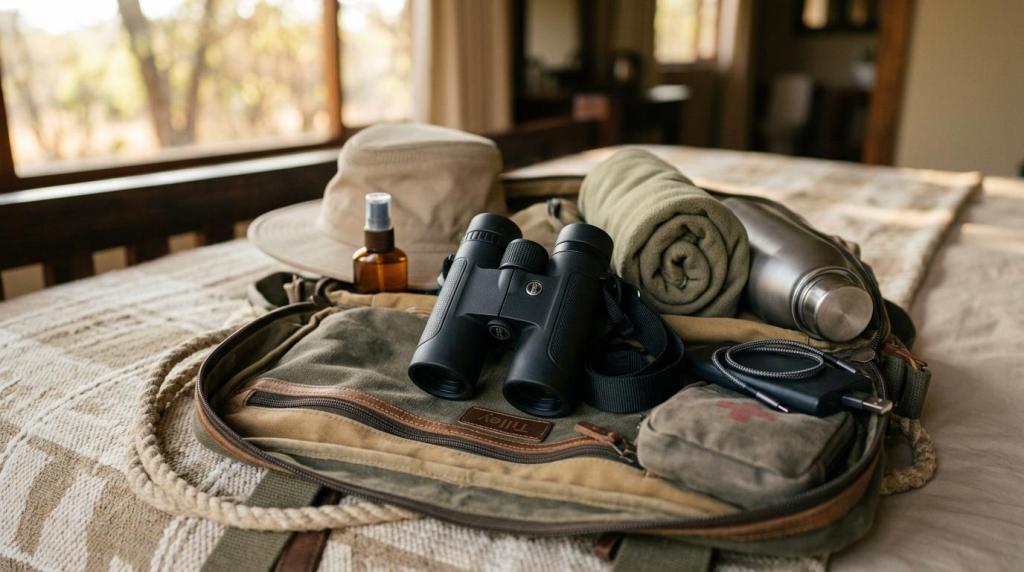
The best Kruger packing list is practical, light, and layered. Families and couples both need sun protection, early-morning warmth, and easy access to the day’s essentials.
You do not need specialist safari fashion. You do need items that keep people comfortable through temperature swings, dusty roads, and long wildlife stops. If children are travelling, pack one extra layer and more snacks than you think you need.
- Clothing: Neutral, comfortable layers for cool mornings and warm afternoons.
- Health items: Prescription medicines, malaria tablets if prescribed, insect repellent, and a simple first-aid kit.
- Sun gear: Hats, sunglasses, sunscreen, and refillable water bottles.
- Family essentials: Wet wipes, small snacks, a light blanket, and one quiet activity for downtime.
- Safari extras: Binoculars, phone power bank, camera, and a soft bag rather than bulky luggage.
Pro tip: pack the safari day bag the night before. Early departures are much calmer when water, hats, medication, and child essentials are already in one place.