A Kruger safari can be as affordable or as indulgent as you want it to be, but the easiest way to avoid surprises is to break the cost into clear pieces. Most travellers focus on the safari itself, then realise later that park fees, meals, fuel, and tips can shift the total quite a bit.
The good news is that Kruger is one of those trips where a little planning goes a long way. If you know what is charged per person, what is charged per vehicle, and what often sits outside the quoted safari price, you can build a budget that feels realistic from the start.
The main parts of a Kruger safari budget
A practical Kruger safari budget usually comes down to five moving parts: park entry, the type of drive, meals and drinks, tips, and transport costs. Once those are separated, the total becomes much easier to work with.
- Daily conservation fee: paid per person, per day, not per vehicle
- Guided drive or safari package: often the biggest single cost after accommodation
- Meals and drinks: sometimes included, often separate
- Tips: small individually, but easy to forget in the total
- Fuel or transfers: especially relevant for self-drives and day trips
That first point matters more than many people expect. Kruger’s official entry charge is a daily conservation fee for each visitor, so a couple, a family, or a group will all see their budget rise person by person.
Kruger National Park conservation fees and entry costs
According to SANParks, Kruger’s daily conservation fees for 1 November 2025 to 31 October 2026 are split by nationality or residency category. These fees are subject to change without prior notice, so it is always wise to check current rates before travel.
Here is the official fee structure for a single day in the park:
| Visitor category | Adult fee | Child fee |
|---|---|---|
| South African citizens and residents | R134 | R67 |
| SADC nationals with a passport | R275 | R137 |
| All other nationalities | R602 | R300 |
This is where many first-time visitors misjudge the budget. A self-drive might sound cheaper than a guided option, but if you are an international couple, your entry fees alone come to R1,204 per day before you buy breakfast, fill the car, or add a coffee stop.
For families, the same rule applies. Two South African adults and two children would pay R402 in conservation fees for one day. Two international adults and two children would pay R1,804. Over several days, that becomes a major line item rather quickly.
Guided drives and Kruger safari package costs
After entry fees, the next big question is how you want to experience the park. A self-drive gives you control over the day and can work well if you are happy to manage timing, routes, and fuel yourself. A guided safari usually costs more upfront, but it can include transport, local knowledge, and in some cases the park fees too.
Kruger offers official guided activities inside the park. SANParks notes that morning drives usually last about 3 to 3.5 hours and leave half an hour before official gate opening. Sunset drives run for about three hours, and night drives leave at 19:30 or 20:00 depending on the season and last around two hours. Children under 6 are not allowed on these guided drive activities.
Private and lodge-organised safaris are a different category. These often start from Hazyview or nearby areas and may include pickup and drop-off, bottled water, and the relevant Kruger entrance fees. Meals, extra drinks, and gratuities are often separate, so the quoted price should never be the only number you look at.
When comparing safari prices, it helps to check these details before booking:
- pickup and drop-off
- conservation fees included or excluded
- bottled water
- breakfast or lunch
- drive length and gate used
- child age policy
A guided day can feel more expensive at first glance, but it may save you on fuel, reduce gate admin, and take the stress out of route planning. That matters to many guests, especially on early starts or short stays.
Meals and drinks inside Kruger National Park
Food is one of the most variable parts of a Kruger safari budget. Some travellers are happy with coffee, rusks, and a packed breakfast. Others prefer a sit-down meal at a camp restaurant and a few snack stops through the day.
Kruger has restaurants at major camps including Lower Sabie, Satara, Olifants, Letaba, Berg-en-Dal, Mopani, Punda Maria, Shingwedzi, Pretoriuskop, and Skukuza. Skukuza’s Cattle Baron Grill & Bistro serves breakfast from 07:00 to 11:00 and lunch and dinner from 12:00 to 22:00. There are also quicker food options in places like Kruger Station, where grab-and-go food, coffee, and treats are available.
This means meals are usually accessible, but not automatically included in your safari cost. Early morning drives often mean breakfast at own expense, and full-day outings nearly always need a lunch plan as well.
A simple way to budget meals is to choose the style of day you want:
- Light spend: coffee, a takeaway breakfast, snacks, water
- Mid-range day: proper breakfast or brunch, lunch, soft drinks, snacks
- Relaxed family spend: meals, drinks, treats for children, extra stops
If you want a practical planning figure, set aside a separate meal allowance rather than trying to fold it into the safari price mentally. Many travellers are comfortable with a modest daily food budget, while families and sit-down restaurant meals will need more room. A cautious approach is better than a tight one here, especially on hot days when drinks and snacks add up faster than expected.
Tips and small extras that are easy to miss
Tips are rarely the biggest cost on a safari, though they are part of the real total. In South Africa, tipping is common, and building in a small allowance helps avoid awkward last-minute cash calculations.
South African Tourism advises that a restaurant tip of 10% to 20% of the bill is acceptable. The same source notes that housekeeping tips of around R50 per day are customary, while porters may be tipped R15 to R20 per bag or trip.
Guide tips are more flexible. There is no one fixed rule across every safari setup, and many guests simply tip according to the level of service and the length of the drive. If you prefer to budget neatly, add a small discretionary amount for guiding and service, then treat it as a thank-you rather than a compulsory fee.
It is also wise to keep an eye on the tiny extras that do not seem like much on their own. A coffee here, a cold drink there, an ice cream stop for the children, or extra bottled water can quietly shift the day’s spend.
Fuel costs for a self-drive Kruger safari
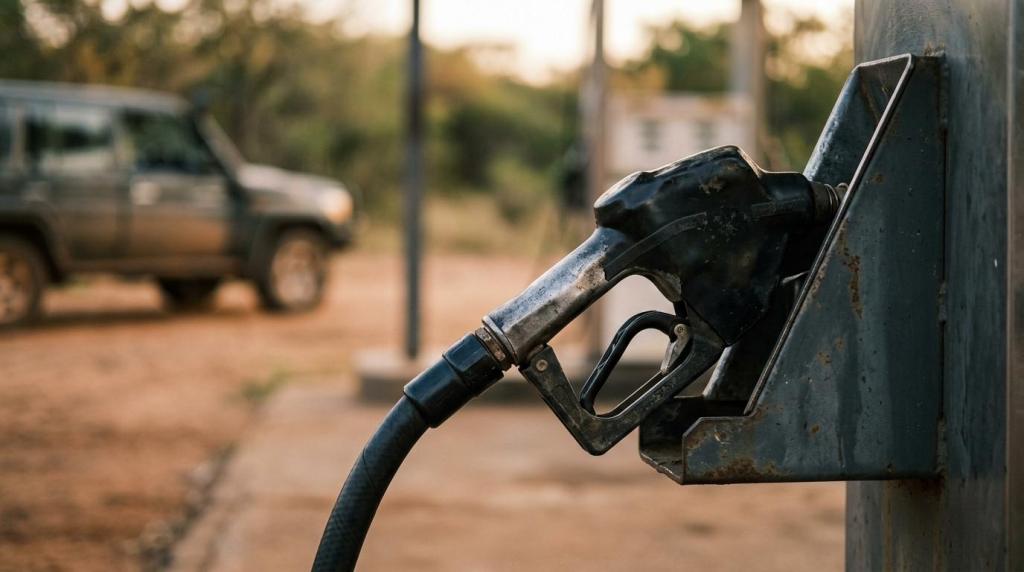
If you are driving yourself, fuel deserves its own line in the budget. South Africa’s fuel prices are adjusted monthly, so the amount you estimate today may not match what you pay next month. That is why a fuel buffer is useful, especially for longer days inside the park.
There is another practical detail many visitors miss: there is no fuel at any Kruger gate, and some operators note that Kruger gates accept card payment only. That makes it sensible to fill up before arrival and to keep your bank card ready for entry costs where relevant.
The distance covered on a Kruger day trip varies a lot. A gentle route from Hazyview through a nearby gate and back may use far less fuel than a long roaming day with several loops, camp stops, and a scenic return. Road choice, waiting time, and air conditioning use can all affect consumption too.
A simple fuel budget can be worked out like this:
- Estimate your round-trip kilometres, including the drive to and from the gate.
- Check your vehicle’s average fuel use per 100 km.
- Multiply the litres needed by the current petrol or diesel price.
- Add a 10% to 15% buffer for detours, idling, or route changes.
That small extra cushion is worth having. Kruger days rarely go exactly to plan, and that is part of the charm.
Practical Kruger safari budget examples
The table below gives rough one-day planning totals for common self-drive scenarios. These are not official package prices. They are working estimates built around the official daily conservation fees, plus realistic allowances for fuel, meals, and small extras.
| Scenario | Park fees | Fuel allowance | Meals and drinks | Tips and extras | Rough total |
|---|---|---|---|---|---|
| 2 South African adults, self-drive | R268 | R250 to R450 | R300 to R700 | R0 to R100 | R818 to R1,518 |
| 2 SADC adults, self-drive | R550 | R250 to R450 | R300 to R700 | R0 to R100 | R1,100 to R1,800 |
| 2 international adults, self-drive | R1,204 | R250 to R450 | R300 to R700 | R0 to R100 | R1,754 to R2,454 |
| 2 South African adults + 2 children, self-drive | R402 | R250 to R450 | R500 to R900 | R0 to R150 | R1,152 to R1,902 |
These examples show why the answer to “How much does a Kruger safari cost?” depends so much on who is travelling. The same route and the same day in the park can look very different on paper for local visitors, SADC travellers, and overseas guests.
For guided safaris, the cleanest method is to start with the operator’s quoted rate and then ask what sits outside it. If conservation fees, transfers, and water are included, you may only need to add meals, tips, and personal extras. If they are excluded, your true spend could be much higher than the advertised base price.
A smart way to compare self-drive and guided safari costs
The choice is not only about price. It is about what kind of day you want. A self-drive can be kinder to the wallet, especially for South African residents or families sharing one vehicle. A guided drive can make sense if you value convenience, do not want to drive long hours, or want someone else to handle timing and gate logistics.
When people compare the two, it helps to think beyond the headline number:
- Self-drive: more flexibility, but you carry fuel, timing, and planning yourself
- Guided safari: easier logistics, but check meals, tips, and extras carefully
- shared drives
- private vehicles
- half-day versus full-day
- early start versus sunset or night drive
If you are staying near Hazyview, having help with safari planning can make the budgeting process much simpler. A well-organised base close to Kruger often reduces transfer stress and helps guests choose between a self-drive day, a guided outing, or a mix of both during the stay.
How to build your own Kruger safari cost in five minutes
Start with the official daily conservation fee for each person in your group. Then add either your self-drive fuel allowance or the quoted safari rate. After that, include a separate amount for meals and drinks, then a smaller amount for tips and small extras.
That simple order works well because it keeps the fixed costs and flexible costs apart. Park fees are non-negotiable. Fuel and safari rates are fairly easy to estimate. Meals, snacks, and tips are where your personal travel style really shows.
If you do only one thing before booking, make sure you ask one plain question: What is included, and what will I still pay for on the day? That one question usually tells you whether the safari fits your budget comfortably or whether the real cost is still hiding in the fine print.