If you’re planning a South African safari, one decision shapes almost everything else about your trip: where you sleep. Choosing the right Hazyview guesthouse near Kruger National Park determines how early you can get into the bush, how relaxed your evenings feel, and how much of your budget is left over for the safaris themselves. This guide walks through why Hazyview works so well as a base, what a good guesthouse should offer, and how to plan a stay that gets the balance right between wildlife, comfort, and convenience.
Why Hazyview Is the Smart Choice for a Kruger Base
Kruger National Park is enormous — nearly 20,000 square kilometres of wilderness — and it has multiple entrance gates scattered along its western and southern boundaries. Where you stay outside the park has a real effect on your safari days. Hazyview sits close to Phabeni Gate, one of the closest and most convenient entrances to the park’s southern section, which happens to be known for some of the highest wildlife densities in Kruger. A dedicated guesthouse near Phabeni Gate puts you within minutes of that entrance rather than an hour or more away.
That proximity matters more than most first-time visitors realise. Game viewing is best in the early morning and late afternoon, when temperatures are cooler and predators are most active. A morning game drive from Hazyview means you can be inside the park at sunrise without a pre-dawn wake-up call, and you can still make it back out comfortably before the gates close. Compare that to staying an hour or two away, and you start losing prime wildlife-viewing time to driving.
Hazyview is also a proper town in its own right, not just a truck stop before the park. There are restaurants, craft markets, and a good spread of things to do in Hazyview beyond the safari itself — useful if you’re travelling with people who want a rest day, or if weather disrupts a game drive.
What Makes a Good Hazyview Guesthouse
Not all accommodation near Kruger is built the same way. A guesthouse, specifically, tends to offer something a large hotel can’t: fewer rooms, more personal attention, and hosts who often know the area better than any guidebook. If you’re comparing a few properties, an overview like Discover the 10 Best Accommodation Spots in Hazyview is a useful starting point, and a few things are worth checking before you book anywhere.
Distance from the gate. Ask specifically how far the property is from Phabeni Gate or whichever entrance you plan to use. “Near Kruger” can mean anywhere from ten minutes to well over an hour, depending on the operator.
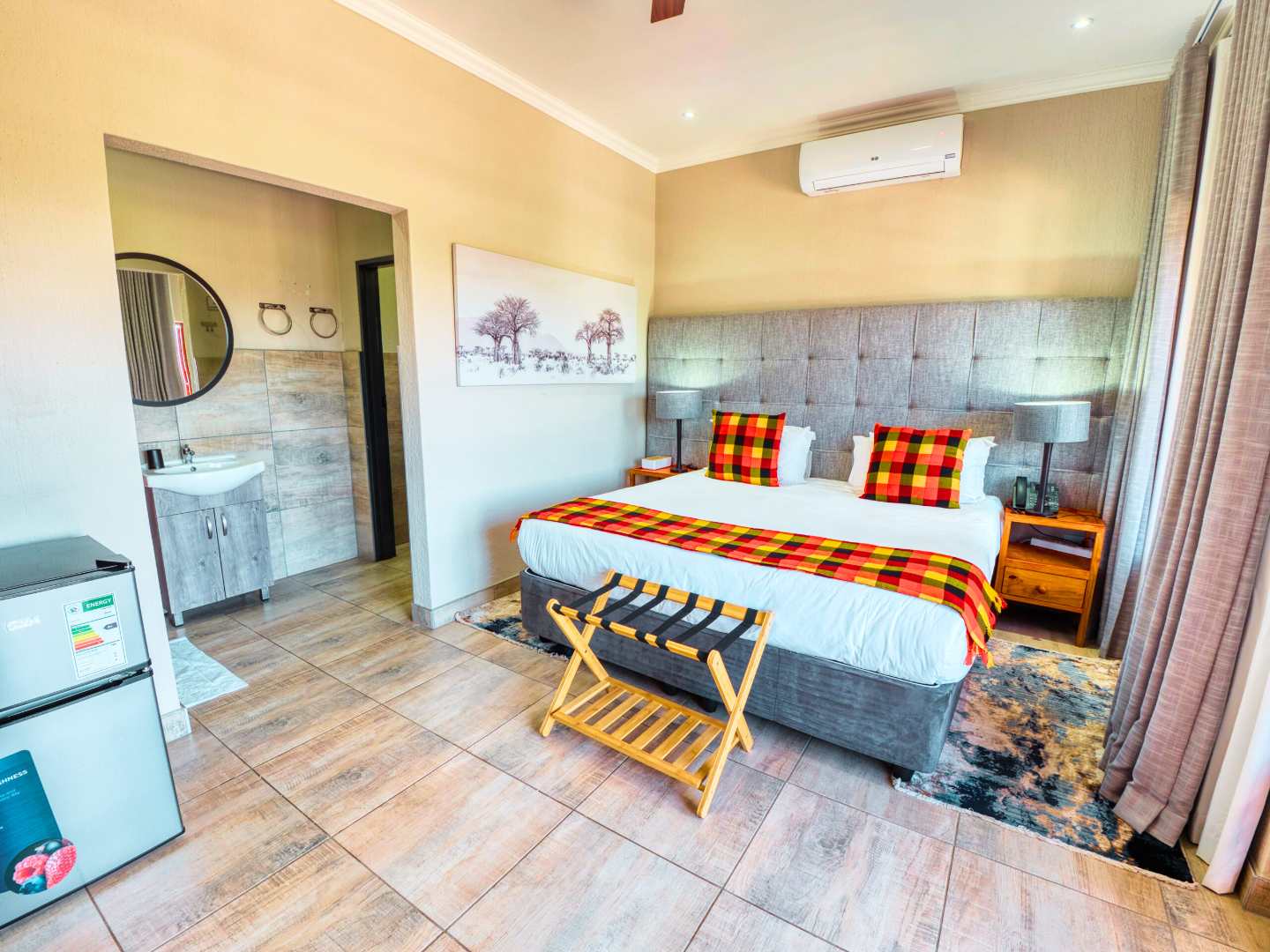
Room variety. Families need different rooms than couples. A well-run guesthouse usually has options ranging from a queen room for two through to a king room or a standard double room with balcony — worth checking a property’s 1-bedroom listings to see what’s actually available for your group size and dates.
Meals and hospitality. After a full day of game drives, a home-cooked dinner and a quiet garden to sit in make a real difference. Many Hazyview guesthouses build this into the experience rather than treating it as an afterthought.
Safari support. The best guesthouses don’t just offer a bed — they help arrange the safari itself, connecting guests with trusted local operators for game drives, transfers, and day trips along the Panorama Route.
A Closer Look at Tembo Guest Lodge
Tembo Guest Lodge is a good example of what this kind of stay looks like in practice. It’s a small, owner-run property in Hazyview offering eight individually appointed rooms plus a family unit, each with air-conditioning, en-suite bathrooms, free Wi-Fi, and in-room tea and coffee facilities. You can read more about the property’s background on the About Us page, but the short version is that it’s built around personal service rather than a large-hotel model — guests are made to feel like part of the household rather than a room number.
The lodge sits roughly ten to fifteen minutes from Phabeni Gate, which puts it firmly in the “genuinely convenient” category rather than the “near Kruger” claims that turn out to mean an hour’s drive. For travellers weighing up their options, the Kruger accommodation overview breaks down how Hazyview compares to staying inside the park itself, including the trade-offs between convenience, cost, and immersion.
Guests looking for a bit more space can browse the Rooms page for family and double room options, while the Hazyview guesthouse page goes into more detail on what a guesthouse-style stay involves compared with a hotel or self-catering unit.
Planning a Stay That Works Around the Safari, Not the Other Way Around
One of the most common mistakes first-time Kruger visitors make is treating accommodation as an afterthought and the safari as the whole trip. In reality, the two are connected. A Kruger National Park guide to entrance fees and planning is worth reading before you book anything, since gate fees, seasonal access hours, and payment rules (Kruger only accepts cashless payment at the gates) all affect how your days will actually run.
If you’re not sure how the logistics of booking a room and organising a safari fit together, the lodge’s own step-by-step guide to booking Kruger National Park accommodation walks through the process from checking availability to arranging your first game drive.
For safaris themselves, guests staying in Hazyview commonly book through independent operators rather than relying purely on self-drive days. Africa Moja Tours runs guided game drives and Panorama Route tours directly out of Hazyview, with pickups arranged from local lodges — useful if you’d rather have an experienced local guide interpreting sightings than navigate Kruger’s roads yourself on your first visit. Their 3-Day Kruger Safari from Johannesburg package, for example, is built specifically around a Hazyview base near Phabeni Gate, which shows how naturally accommodation and safari planning overlap in this region.
If you’re weighing up multi-day safari packages more broadly, it’s also worth looking at what Kruger Safari Africa’s Greater Kruger tours offer for comparison, particularly if you’re considering combining a Hazyview stay with time in one of the private reserves further north, such as Sabi Sands or Timbavati. Their Sabi Sands safari packages give a useful sense of pricing and lodge standards if you’re comparing a Hazyview-based trip against a private-reserve stay.
Making the Most of Your Time Outside the Park
A guesthouse stay in Hazyview isn’t only about proximity to Kruger — it’s also a convenient base for exploring the wider region. The self-drive routes from Hazyview cover several full and half-day scenic loops, including the famous Panorama Route, which takes in Blyde River Canyon, God’s Window, and Bourke’s Luck Potholes and is easily reached as a day trip from most Hazyview properties.
For a broader overview of why the town works so well as a base, Why Hazyview Is the Perfect Gateway to Kruger National Park covers restaurants, seasonal considerations, and how to structure a short break around one safari day and one scenery day — a pattern that tends to suit couples, families, and business travellers adding a short leisure trip onto a work visit.
If your budget and time allow for a longer stay, a 5-day Kruger itinerary from Hazyview sets out a flexible plan that balances multiple game drives with rest days and regional day trips, rather than packing every day with back-to-back activities.
Choosing Between Kruger Park Accommodation and a Hazyview Base
Some travellers assume staying inside Kruger’s rest camps is automatically the better option, since it puts you right in the wilderness. That’s true in some respects, but it also comes with trade-offs: fewer dining choices, higher accommodation costs in some cases, and less flexibility if your plans change. The Kruger Park accommodation page compares several of the park’s rest camps, including a detailed look at Crocodile Bridge Rest Camp and accommodation close to Orpen Gate, two of the more popular options for wildlife viewing inside the park itself.
For many visitors, particularly those on their first trip, a Hazyview guesthouse strikes a better balance: close enough to the park for early starts, but with more accommodation choice, a wider range of restaurants, and the flexibility of a small town rather than a fenced rest camp.
How far is Hazyview from Kruger National Park? Hazyview itself sits just outside the park boundary, with Phabeni Gate typically a ten-to-fifteen-minute drive from most Hazyview lodges. That’s considerably closer than some of the other gateway towns further south or west, which can add well over an hour to your morning safari plans.
Is it better to stay in Hazyview or inside Kruger’s rest camps? It depends what you’re optimising for. Staying inside the park puts you closer to the wilderness overnight, but it also limits your dining options, tends to cost more for equivalent comfort, and reduces flexibility if you want to change plans. A Hazyview guesthouse gives you a wider choice of accommodation, more restaurants, and the option to add scenic days like the Panorama Route without extra driving.
What should a family look for in a Hazyview guesthouse? Family groups generally do best with a property that offers multiple room configurations under one roof — larger family units alongside standard doubles for other members of the group — plus a garden or pool area where kids can unwind after a long game drive. It’s also worth asking whether the lodge can help coordinate a family-friendly safari schedule, since very early starts don’t always suit younger children.
Do I need to book a guided safari, or can I self-drive from Hazyview? Both are possible. Self-driving is more flexible and can be cheaper, but it requires more research into ga
Common Questions About Staying in Hazyviewte times, road conditions, and where recent sightings have been reported. First-time visitors typically get more out of a guided drive, since local guides know the terrain and can interpret animal behaviour in a way that adds real value to the experience.
What’s the best time of year to stay in Hazyview for a Kruger safari? The dry winter months (roughly May to September) are generally considered prime wildlife-viewing season, since thinner vegetation and fewer water sources make animals easier to spot. Summer brings lush scenery and excellent birdlife, but with more heat, humidity, and afternoon rain. Either season works well from a Hazyview base — the difference is mainly in what kind of experience you’re after.
Final Thoughts
Picking the right base for a Kruger trip comes down to a short list of practical questions: how far is it from the gate, what room types are actually available for your group, does the property help arrange safaris, and is there enough going on nearby for a non-safari day. A well-located Hazyview guesthouse near Kruger National Park — one genuinely close to Phabeni Gate, with a range of rooms and a track record of helping guests plan their days — tends to answer all four.
Whether you book directly with a lodge or arrange your stay as part of a guided package through an operator like Africa Moja Tours or Kruger Safari Africa, the fundamentals stay the same: proximity to the gate, comfortable rooms to return to after a long game drive, and a location that lets you spend more time watching wildlife and less time in the car.