A Kruger trip often starts with the same question: what exactly am I paying for at the gate? The answer is simpler than many first-time visitors expect, though there are a few details that can affect your budget.
The short version is this: Kruger National Park charges a daily conservation fee per person, not a fee per private vehicle. That fee changes according to your visitor category, and it sits alongside a few other possible costs like accommodation, guided activities, peak-season booking charges, and the small community levy attached to certain bookings.
How Kruger National Park entrance fees work
Kruger’s main entry charge is the SANParks daily conservation fee. This applies to each person entering the park for the day, whether you are driving yourself, joining a transfer, or travelling as part of a group. Drivers and passengers are all counted individually.
That point matters because many travellers still expect a car-based gate fee. In Kruger, there is no separate private vehicle entrance fee for standard park entry. If four people arrive in one car, all four pay the daily conservation fee according to their category.
As of 1 November 2024 to 31 October 2025, the published rates are approximately as follows:
| Visitor category | Adult | Child | Notes |
|---|---|---|---|
| South African citizens or residents | R134 | R67 | Proof of SA ID or permanent residence required |
| SADC nationals | R275 | R137 | Passport required |
| International visitors | R602 | R300 | Passport required |
| Infants under 2 | Free | Free | No conservation fee |
Children are generally charged at the child rate from 2 to 11 years, while the adult rate starts from 12 years and older. Pensioner concessions may apply in some cases for qualifying South African seniors, though travellers should always confirm the current rule directly with SANParks before arrival.
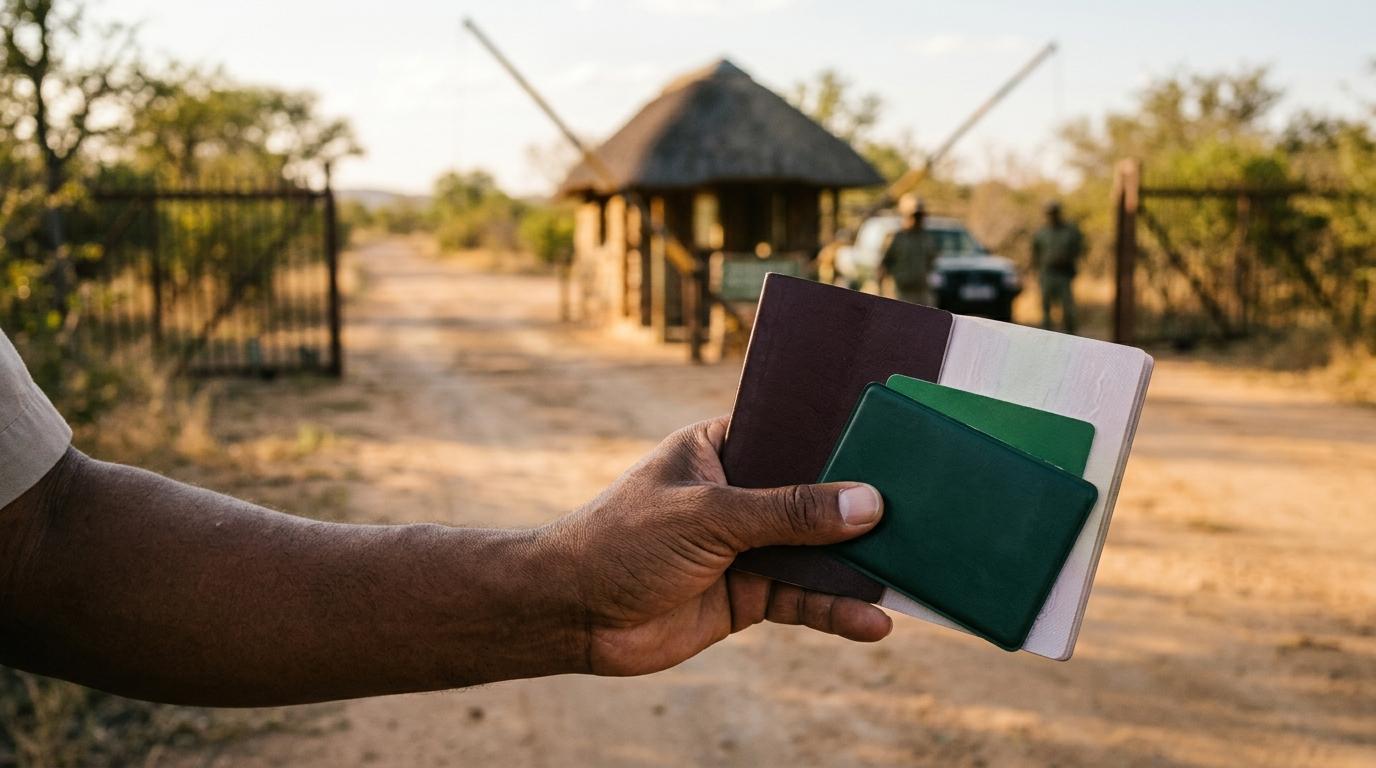
If you want the local rate, your documents matter just as much as your nationality.
Before entering, keep these ready:
- South African ID
- Passport
- Proof of permanent residence
- Wild Card, if you have one
- Booking confirmation, if pre-booking applies
A valid Wild Card can waive the daily conservation fee altogether, depending on the type of card and the parks it covers. For regular Kruger visitors, this can make a real difference over a few trips.
Kruger National Park costs beyond the gate fee
conservation fee is the entry cost, but it is not the full cost of a Kruger visit. If you are planning your budget properly, it helps to separate the gate fee from the rest of your spend.
Accommodation inside the park is charged separately. The same applies to safari activities, guided walks, wilderness trails, and selected specialist permits. If you are staying outside the park in Hazyview or another nearby area and doing day trips, you may only need to budget for the daily conservation fee and whatever transport or guiding you choose.
SANParks also adds a 1% Community Levy to accommodation and activity bookings. This is not the main gate fee, but it is part of the wider tariff picture and supports community-focused initiatives linked to the park system.
Common extra charges can include:
- Accommodation: nightly rates for camps, cottages, or safari lodges
- Activities: guided walks, drives, or specialist experiences
- Community Levy: 1% added to accommodation and activity bookings
- Peak-season booking fee: admin charges linked to mandatory advance bookings for some busy periods
- Transport: road transfers or private safari transport if you are not self-driving
This is why two visitors can talk about a “Kruger budget” and mean very different things. A self-drive day visit and a multi-night safari package are built from very different cost layers.
Peak season booking rules for Kruger day visitors
The daily conservation fee itself does not usually rise and fall with school holidays or long weekends. SANParks generally updates tariffs once a year, with new rates taking effect on 1 November.
What does change in very busy periods is access management. During peak dates, especially over the festive season, SANParks may require day visitors to book online in advance because gate quotas are introduced to control traffic, improve safety, and limit pressure on roads and facilities.
That means you could pay the normal conservation fee plus a small admin fee tied to the booking process. In recent festive periods, SANParks has published examples of online booking charges in the region of R59 per adult and R29 per child, though these can change from season to season.
If you are travelling in December, over Easter, or during major school holidays, it is wise to assume that booking rules may be stricter than usual.
A few practical reminders help:
- Book early for festive dates
- Check gate-specific access notices
- Carry the same ID used for the booking
- Arrive within the allowed time window
- Do not assume a Wild Card replaces a booking during quota periods
What SANParks conservation tariffs are meant to support
The word “tariff” can sound dry and administrative, yet behind it sits something far more tangible: roads that need repair after heavy rain, ranger teams on patrol, fences and gates that need maintenance, staff who keep camps running, and ongoing work to protect habitats and wildlife.
At Kruger level, SANParks does not publish a neat line-by-line split showing exactly how each rand from each visitor is spent. Even so, the broad picture is clear. Conservation fee income feeds into park operations and the wider SANParks system, helping support anti-poaching work, ecological management, visitor facilities, infrastructure upkeep, and community-linked programmes.
There is also a strong local ripple effect. Government statements over recent years have linked SANParks activity to thousands of jobs, support for small businesses, and practical community benefits around protected areas. That does not mean every visitor fee can be traced to one specific project, but it does show why these tariffs are treated as more than just an entry charge.
In the conservation space, the need is ongoing. Rhino protection, species monitoring, fire management, alien plant control, road maintenance, water systems, waste handling, and staff training all come with real costs. For a park the size of Kruger, those costs are substantial.
Why Kruger entrance fees change from time to time
Fee increases are rarely popular, yet they are usually linked to a few practical pressures rather than a single reason. SANParks reviews tariffs annually, and inflation is part of that picture. Fuel, wages, maintenance materials, utilities, and service contracts do not stand still.
Environmental pressure also affects pricing policy. Kruger is one of Africa’s most visited protected areas, and visitor numbers have to be balanced with conservation needs. Keeping the park open and welcoming while still protecting sensitive landscapes is not a cheap task.
Policy and access matter too. SANParks keeps lower rates for South African citizens and residents, which supports domestic travel and makes the park more reachable for local families. International rates are higher, which helps bring in revenue from global tourism while keeping local pricing comparatively softer.
The main influences are usually:
- Operating costs: inflation, staffing, fuel, maintenance, and utilities
- Conservation pressure: anti-poaching, habitat care, species monitoring, and infrastructure wear
- Access policy: reduced rates for South Africans, children, and some seniors
- Demand management: quotas and advance booking during crowded holiday periods
- Governance: annual tariff approvals through SANParks processes
There is also an ongoing public conversation around fairness. Many people support conservation fees because parks need stable funding. At the same time, local communities and tourism businesses often want those fees to stay affordable and to deliver visible benefits nearby. That tension is part of the wider SANParks tariff story.
How Kruger compares with other South African park fees
Kruger is not the only South African park with conservation fees, but its structure is one of the clearest. The park charges a unified per-person daily fee, with no standard vehicle charge for private entry.
That differs from Pilanesberg, where visitors can face both a per-person fee and a vehicle fee. It also differs from Table Mountain National Park, where fees can vary by site, with places like Boulders Beach and Cape Point carrying their own rates. Addo Elephant National Park tends to sit lower than Kruger on daily entry pricing, which reflects its different scale, visitor profile, and infrastructure demands.
Kruger’s rates are on the higher side for South African parks, yet so are its operational demands. The park covers a vast area, supports major wildlife protection work, and receives huge visitor numbers each year. Put simply, a park of this size costs a great deal to run well.
That is also why comparing headline prices without context can be misleading. A smaller park near an urban centre may have a different traffic pattern, different wildlife pressures, and a very different maintenance bill.
Practical Kruger budgeting tips for families and safari travellers
A realistic budget starts with the right category. Many payment issues at the gate happen because a visitor expects the South African resident rate but does not have the correct proof with them. In that case, the higher category may be charged.
It also helps to decide early whether you are doing a day visit, an overnight stay inside the park, or a guided safari from nearby accommodation. Each option changes the overall spend in a different way. Families often find that staying outside the park and entering on selected days gives them more flexibility, while others prefer the convenience of sleeping inside the reserve.
If you plan to visit more than once in a year, a Wild Card may be worth pricing out. If you are travelling over a busy holiday, add room in your budget for online booking or admin fees. And if guided activities are on your wish list, treat them as separate line items rather than part of the entry fee.
A simple planning checklist can save time and money:
- Check the date range: SANParks tariffs usually reset on 1 November
- Confirm your category: SA resident, SADC national, or international visitor
- Bring the right documents: rate category proof is essential
- Budget for extras: accommodation, activities, transport, and levies are separate
- Watch peak-season rules: festive dates may require advance online booking
- Verify current rates: SANParks updates notices from time to time
For many guests, the easiest approach is to treat the conservation fee as the base cost of access, then build the rest of the trip around comfort, time, and the kind of wildlife experience they want. That keeps the numbers clear and makes the day feel far more relaxed from the moment you reach the gate.